haoku123/dsh-voice
Full-duplex voice plugin for DeepSeek Harness: mic → SenseVoice ASR (sherpa-onnx) → LLM → Edge TTS with true barge-in. 全双工语音插件:麦克风语音输入,SenseVoice 本地识别(简体中文+标点+ITN),流式 TTS 朗读,支持语音打断。Zero API key.
Listed
0
Voice
Bundle verified
Preview
What it does
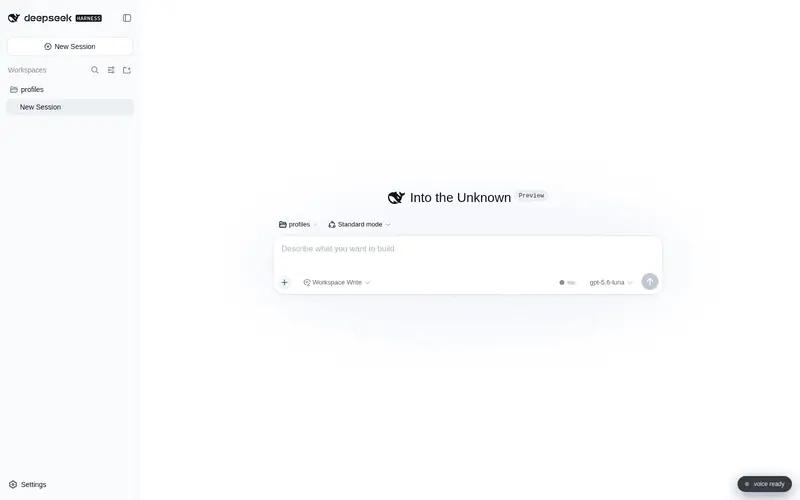
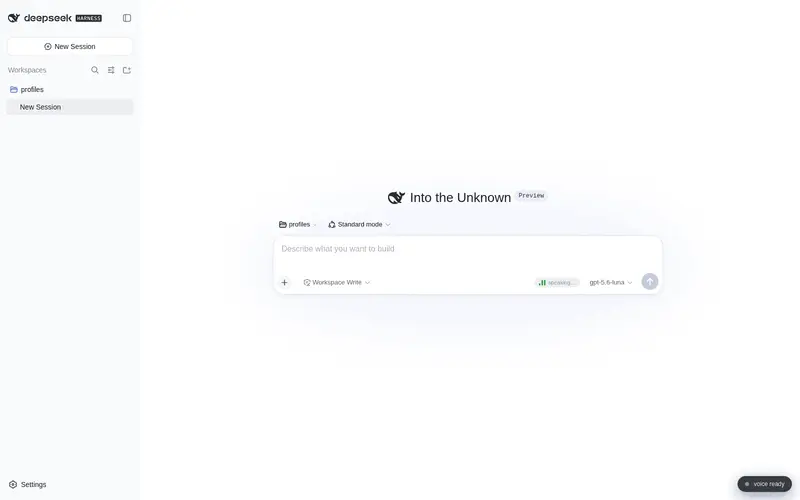
Full-duplex voice mode for the Web UI: a composer mic (RMS endpoint detection) transcribes speech with whisper running locally in the browser, assistant replies stream back as spoken audio sentence-by-sentence, and speaking interrupts playback and the running turn (true barge-in). No API key.
Best for
- Users who want hands-free or press-to-talk conversations in the DSH Web UI without an API key.
- Voice workflows that need sentence-by-sentence spoken replies and true barge-in to stop playback and the active turn.
- Users who benefit from live captions, continuous dictation, hold-to-talk, or a configurable keyboard hotkey.
Not ideal for
- Platforms where loud speaker playback leaks into the microphone despite browser echo cancellation; no JavaScript-level acoustic echo cancellation is provided.
- Text-only environments without usable microphone or audio playback access.
- Hosts outside the documented Node.js range of >=22.19 or >=24.
README
dsh-voice
Full-duplex voice mode for DeepSeek Harness: streamed ASR → LLM → TTS with barge-in.
Status
v0.7.0 — press-to-talk with a live caption.
Speak into the composer mic: the assistant silences itself (playback stops, host synthesis queue drops), the running turn is cancelled (the stop-button route), and your speech is transcribed by the host (SenseVoice, CN-native simplified-Chinese ASR with punctuation + ITN) and submitted. The reply streams back as spoken audio with live captions.
Three ways to dictate:
| gesture | behaviour |
|---|---|
| tap the mic | continuous dictation; the VAD segments on trailing silence |
| hold the send key (or the mic) | records until release, slide up to discard |
hold Ctrl (configurable asr.hotkey) |
same, without leaving the keyboard; Esc discards |
While a hold is open the overlay shows a live caption — the interim transcript of what has been said so far — and keeps a spinner up after release until the authoritative transcript lands.
Known limitation: barge-in detection is triggered by the mic’s leading
speech edge, which relies on browser-level echo cancellation
(getUserMedia({ echoCancellation: true })). Loud TTS playback may leak
into the mic on some platforms; there is no JS-level AEC.
Demo

The loop: hold the composer’s send key (its arrow is covered by a mic glyph),
watch the live caption fill in while you speak, release into a spinner until
the final transcript lands, then the reply streams back as spoken audio
sentence-by-sentence — until the user’s voice interrupts playback and stops
the running turn mid-line (true barge-in). Ctrl does the same without
leaving the keyboard.
How it works
input:  mic ──RMS endpoint detection──▶ POST /asr (raw f32 PCM)
                                           │ text (SenseVoice)
                                           ▼
        composer draft ──submit──▶ model stream ──llm/stream tap──▶ SentenceSegmenter
                                                                     │
        browser ◀── SSE /dsh-voice-api/stream ── TtsQueue (msedge-tts) ◀──┘
                  (base64 MP3 frames + caption text)

barge-in: speech edge ──▶ engine.skip() + POST /cancel (epoch bump)
                         + session.cancel() when a turn is running
- The
llm/streamtap is lossless: every chunk is yielded unchanged, the segmenter only observes. The model stream is never blocked by synthesis. - ASR runs host-side with sherpa-onnx (Apache-2.0) running SenseVoice — the CN-native speech model that outperforms whisper on Chinese: native simplified output, punctuation, inverse text normalization (ITN) and 50+ language auto-detection. The browser only records and posts raw little-endian f32 PCM.
- Model files stream through a cache-through proxy at
/dsh-voice-api/hfand are mirrored to disk (~/.cache/dsh-voice/models/, configurable viacacheDir), so every browser/recognizer load after the first is served from local disk. Downloads resume from partial.partfiles when interrupted. Usenpm run prefetchto warm the cache once. - RMS endpoint detection: 16kHz getUserMedia, 2s trailing-silence cutoff, max 30s segment, pre/post padding. Zero dependencies.
- Press-to-talk bypasses the VAD entirely. Holding the key is already the intent, so every buffer between press and release is kept — gating on loudness there only drops quiet speech, which is indistinguishable from a broken button. Only captures below 250ms are discarded (mis-taps).
- Live caption: while a hold is open the engine re-decodes the buffer every ~900ms and shows the interim text. SenseVoice is not a streaming model, so this is only requested while the overlay is actually on screen, and stops past 12s of audio. Interims are strictly previews: they never reach the composer draft, and an interim that lands after the release is dropped (epoch check) so it can never overwrite the final transcript.
- Barge-in is three-layered: local playback queue cleared, host
TtsQueueepoch bumped (queued AND in-flight synthesis dropped), and the running turn cancelled whensession.runningis true. An aborted turn never flushes its trailing half-sentence — exactly what the user interrupted. -
modelHostaccepts any HF-compatible mirror (e.g.https://hf-mirror.comfor CN networks).
API
| Route | Purpose |
|---|---|
GET /dsh-voice-api/stream |
SSE; event: audio frames {sessionId, seq, text, audio(base64 MP3)}
|
POST /dsh-voice-api/asr |
raw little-endian f32 PCM body → {text} via SenseVoice |
POST /dsh-voice-api/cancel |
{sessionId} drops queued + in-flight synthesis (epoch bump) |
GET /dsh-voice-api/config |
ASR runtime config {asr: {...}} for the mic button |
GET /dsh-voice-api/hf/* |
cache-through HF model proxy (mirrors to cacheDir) |
GET /dsh-voice-api/* |
ping: {ok, name, enabled}
|
Config (bundle patch row):
- id: voice
  name: '@haoku123/dsh-voice'
  config:
    voice: zh-CN-XiaoxiaoNeural
    cacheDir: ~/.cache/dsh-voice/models   # optional, on-disk model cache
    asr:
      model: csukuangfj/sherpa-onnx-sense-voice-zh-en-ja-ko-yue-2024-07-17
      modelHost: https://huggingface.co   # or https://hf-mirror.com
      language: auto                      # auto | zh | en | ja | ko | yue
      useItn: true                        # inverse text normalization
      autoSend: false
      mode: toggle                        # toggle | hold
      hotkey: Control                     # keyboard press-to-talk; '' disables
Model files are fetched through the proxy on first use; warm the cache once with the dsh host running:
npm run prefetch # uses http://127.0.0.1:3080 by default
Install
dsh plugin --profile web add <repo-url-or-path>
dsh --profile web
Note: needs Node ≥ 22.19 or ≥ 24 (node:zlib zstd APIs).
Tests
npm test                                # segmenter unit tests (pure, no network)
node test/host.integration.test.mjs     # llm/stream tap + real Edge TTS + SSE + /config
node test/bargein.test.mjs              # client inject face wiring (skipPlayback/cancelTurn)
node test/bargein-semantics.test.mjs    # aborted turn no-flush + cancel drops in-flight
node verify-client.mjs                  # client bundle registration/exports/slots/dynamic-import
Frequently Asked QuestionsFAQ
Use the verified command dsh plugin --profile default add github:haoku123/dsh-voice in a DSH-enabled shell. The command resolves the public package metadata and keeps the plugin attached to the catalog identity shown on this page.
Compatibility follows the bundle and profile status shown above. If a profile is not detected, keep the plugin disabled there and check the repository documentation before enabling it in production.
The GitHub link and activity metadata are the source of truth for releases and maintenance. Revisit this page after a new release to confirm the catalog has observed the latest version.