mervyn-teo/dsh-plugin-collapsible-steps
Collapses consecutive tool-use and thinking steps between messages into a single bracketed, expandable item.
Listed
0
Ui
Bundle verified
Preview
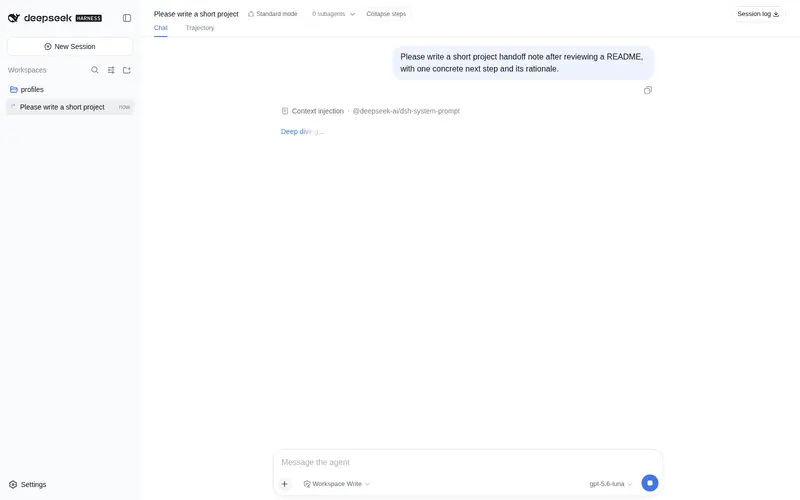
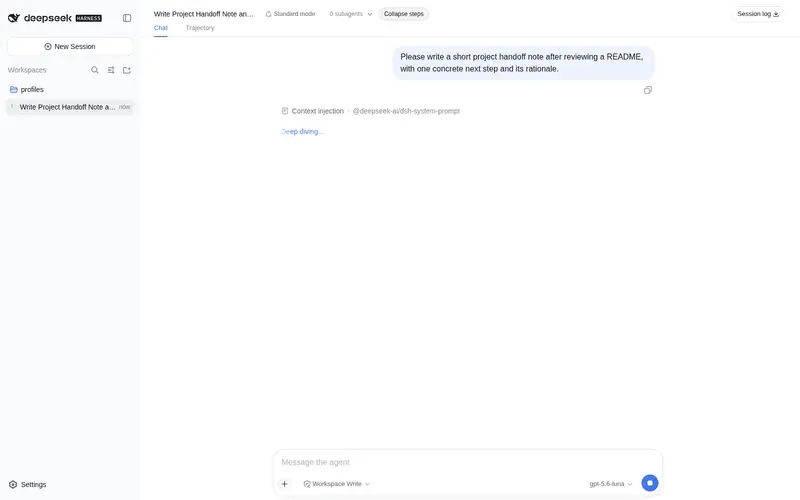
What it does
Collapses consecutive tool-use and thinking steps between messages into a single bracketed, expandable item.
Best for
- DSH Web users whose conversations contain long runs of tool calls, commands, or reasoning steps.
- Users who want compact transcripts while keeping the latest step visible and every step expandable.
- Teams that want to retain the shipped conversation cards and markdown rendering.
Not ideal for
- DSH installations without the base conversation UI mounted.
- Conversations with few consecutive collapsible steps, where grouping adds little value.
- Users who need steps removed, summarized, or rendered differently rather than merely hidden and expanded.
README
dsh-plugin-collapsible-steps

| English | 中文 |
A DeepSeek Harness (DSH) Web
plugin that folds every run of consecutive collapsible-card steps between
messages into a single + N steps row. Click the row to collapse the run
(hiding all but the most recent step) or expand it back. The shipped
conversation cards and markdown answers are left untouched — the rows are
annotated, never replaced.
What it does
- Adds a Collapse steps / Expand steps control to the session header, and a
- N stepsrow before every run of consecutive step nodes. - Collapsing a row hides that run’s rows (
display: none, so no empty gaps are left behind) except the most recent one, which stays below the+ N stepstext; clicking+expands the run back. - A “step” is any collapsible-card row —
tool-call,workflow-run,command,command-input,compaction,context(context injection),manual-compaction,model-retry, and an assistant message’sThink(reasoning) disclosure. The final text answer, user/steering messages, and turn notices act as group boundaries. - The regular tool cards, reasoning sections, and markdown answer rendering all remain the shipped DSH ones.
- A Collapsible steps card under Settings → Plugins controls whether runs are collapsed by default.
Settings
The plugin registers a collapsible-steps settings namespace with one option:
-
collapseByDefault(boolean, defaulttrue) — collapse runs of steps by default. Turn it off to keep runs expanded until you collapse them manually.
How it works
The slot system gives a plugin no way to wrap the shipped conversation cards, so instead of replacing the step renderers this plugin annotates the shipped DOM: it reads the conversation node order through the session hook, computes the runs of consecutive steps, and inserts the bracket headers directly into the existing flow (the node rows themselves are never moved, so the shipped view keeps reconciling normally).
Files
| File | Purpose |
|---|---|
lib/client.js |
Browser half — the header control, bracket insertion, collapse state, and the settings card. |
lib/index.js |
Host half — registers the collapsible-steps settings namespace. |
lib/invariant.js |
Invariant registration. |
cordis.patch.yml |
Composition patch that inserts the plugin row and its default config. |
package.json |
Package metadata (dsh.bundle + dsh.client manifest). |
Install
dsh plugin --profile web add github:mervyn-teo/dsh-plugin-collapsible-steps
Then restart dsh web — host bundles load at boot.
Requirements
- DSH with the base conversation UI (
@deepseek-ai/dsh-client-ui-conversation) mounted — the plugin inserts brackets into its chat flow.
License
Frequently Asked QuestionsFAQ
Use the verified command dsh plugin --profile default add github:mervyn-teo/dsh-plugin-collapsible-steps in a DSH-enabled shell. The command resolves the public package metadata and keeps the plugin attached to the catalog identity shown on this page.
Compatibility follows the bundle and profile status shown above. If a profile is not detected, keep the plugin disabled there and check the repository documentation before enabling it in production.
The GitHub link and activity metadata are the source of truth for releases and maintenance. Revisit this page after a new release to confirm the catalog has observed the latest version.