titanwings/dsh-automation
DSH 自动化插件:让 Coding 任务按计划在全新 Agent Session 中运行,并由用户或 Agent 创建和管理定时任务。 / Run coding tasks in fresh Agent sessions and manage schedules from DSH Web or an Agent.
Listed
53
Workflow
Bundle verified
Preview
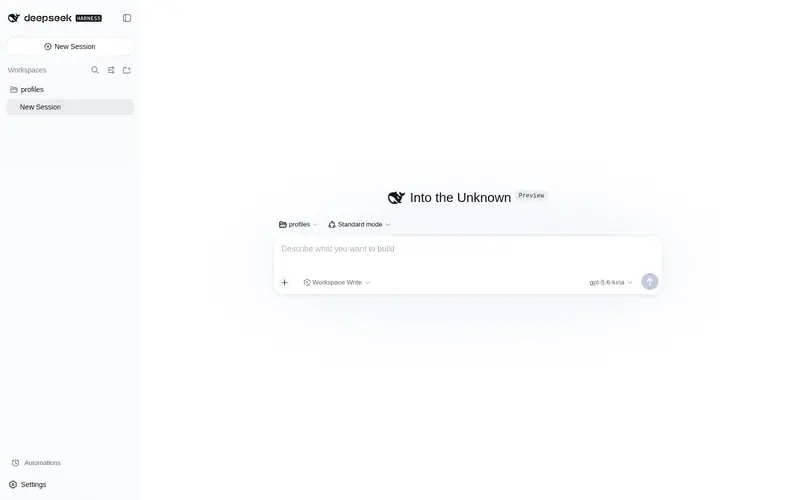
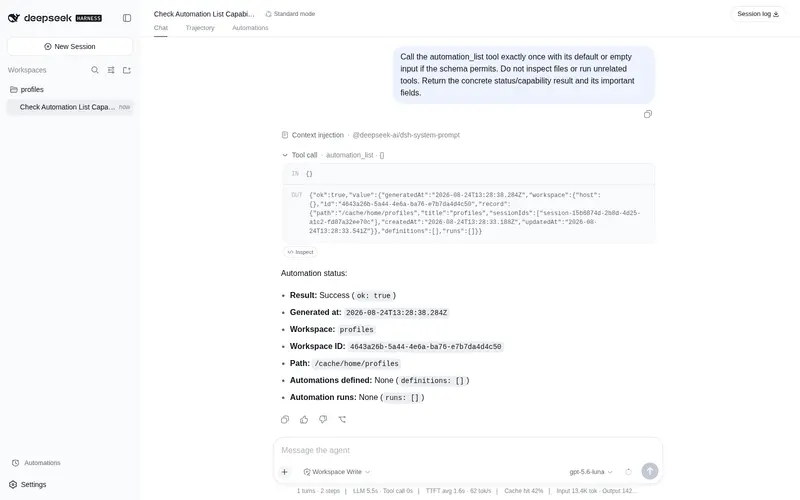
What it does
Scheduled coding runs in fresh agent sessions with auditable history.
Best for
- Recurring or one-shot coding tasks that are complete enough to run unattended at a scheduled time.
- Teams that need each occurrence to use a fresh root agent and session within an explicit workspace and permission boundary.
- Users who need durable run history tied to the exact automation-definition revision.
Not ideal for
- Same-chat reminders or follow-ups that should retain the current conversation; DSH Core Schedule fits those instead.
- Tasks that depend on unstated chat history, require interactive approval midway, or trigger on file, HTTP, or process conditions.
- Workflows requiring automatic retries, multi-workspace DAGs, worktree lifecycle management, or exactly-once external side effects.
README
⏱️ dsh-automation
Run coding tasks on schedule. Manage them from Web or Agent.





|
🕒 Need recurring or one-shot coding work to run later without relying on an old chat? 🧭 Need each unattended run to stay inside an explicit workspace and permission boundary? 🧾 Need to inspect what ran, which revision it used, and how it ended? |
✨ dsh-automation turns all three requirements into one workflow.
Create and manage schedules from DSH Web or any eligible root Agent. Every dispatched occurrence starts in a fresh root Agent and Session, then leaves an auditable record.
Self-contained task + schedule + permission boundary → fresh root Agent + fresh Session + durable run history
Why automation · Features · Install · Quick start · Safety · Technical details
English · 简体中文


🎯 Why automation
DSH Core Schedule is the right tool for reminders in the current conversation: “come back to this Session in ten minutes.” dsh-automation handles a different job: “run this complete task independently every weekday and leave me a result I can inspect.”
| DSH Core Schedule | dsh-automation | |
|---|---|---|
| Execution context | Returns to the same live Agent | Starts a fresh root Agent and Session |
| Input | A follow-up inside existing context | A saved, self-contained task |
| Scope | Current Session Log | One canonical DSH workspace |
| History | Conversation events | Definition revisions and durable run records |
| Best for | Reminders and same-chat follow-ups | Repeated or one-shot standalone coding work |
If a task depends on unstated chat history, needs an interactive approval halfway through, or should react to a file, HTTP, or process condition rather than time, it is not a good automation yet.
✨ Features
🕹️ One control plane, two ways in
- DSH Web: use the Automations conversation tab to create a rule, pause or resume it, run it now, delete it, and inspect recent runs.
- Any eligible root Agent: ask in natural language. Six scoped tools let the Agent manage automations only for its exact workspace.
There is no separate bot, daemon UI, or third-party scheduler to operate.
📅 Schedules people can read
Create a one-shot, fixed-interval, daily, or weekly rule. Daily and weekly schedules use an IANA time zone; the friendly form is normalized into a validated RFC 5545 RRULE for persistence and inspection.

🧼 A clean execution boundary every time
Each dispatched occurrence receives:
- a new Session ID and fresh root Agent;
- the saved prompt, not the source conversation history;
- the captured workspace, cwd, Agent preset, model target, and permission preset;
- an explicit
automationmessage source containing the automation ID, run ID, and scheduled time; - a terminal result derived from the actual DSH turn end, not merely “message delivered.”
🧾 History that explains failure as well as success
Runs progress through queued, running, and a terminal state such as succeeded, failed, skipped, or cancelled. Each record keeps its definition revision, prompt and target snapshot, scheduled time, result Session ID, bounded summary, and structured error.

Updating a definition increments its revision, so each retained run still identifies what it executed. Deleting the definition does not immediately erase those run records. Retention removes only the oldest terminal records; queued and running records are never pruned.
Set archiveRunSessions: true in the Cordis plugin config to archive completed, failed, cancelled, and other terminal run Sessions from the ordinary DSH conversation list. Their logs are not deleted: the Automations run history keeps the Session ID, summary, and error as an auditable inbox. Current Harness releases do not expose an unarchive API, so an archived result is labeled instead of offering a broken Session-open action. The default is false and preserves ordinary Session navigation.
⚡ Install
Install the GitHub bundle into the DSH Web profile, then restart dsh web:
dsh plugin --profile web add github:titanwings/dsh-automation#v0.1.6
The version tag keeps the install reproducible; a reviewed commit SHA is equally valid. If you run DSH from its source checkout, use pnpm dsh in place of dsh.
Frequently Asked QuestionsFAQ
Use the verified command dsh plugin --profile default add github:titanwings/dsh-automation in a DSH-enabled shell. The command resolves the public package metadata and keeps the plugin attached to the catalog identity shown on this page.
Compatibility follows the bundle and profile status shown above. If a profile is not detected, keep the plugin disabled there and check the repository documentation before enabling it in production.
The GitHub link and activity metadata are the source of truth for releases and maintenance. Revisit this page after a new release to confirm the catalog has observed the latest version.